
top of page
  • Twitter
  • Instagram
  • Youtube
IMG_20201016_111734.jpg
Kansai and Beyond LOGO b+w big.png

Daily Life

Want to know what life in Japan is like? Read more about it here on my posts!

Teaching

Interested in working in Japan as an ALT? I've got you covered! Read more.

Travel

The exciting part of living in Japan is getting to travel through this beautiful country. 

Tips & Tricks

Other posts on food, art, culture, daily rambling, rants, etc etc...

Subscribe to Kansai & Beyond for updates!

Thanks for submitting!

Search

As a Japan travel enthusiast, I'm often scrolling through a ton of advice forums and threads. One of the most discussed topics on these threads is TeamLab.


If you're unaware of what TeamLab is, they're essentially a company that has grown quite significantly in a short amount of time for their art installations. And not just any art installation, they have been quite innovative with art projections, digital art and interactive types of art. I wouldn't go to say that they're pioneers in the field - but they've certainly inspired and gained global recognition for this type of artwork.


TeamLab in Kyoto's Shimogamo Shrine

Most of their initial installations are limited time displays, like the one above in Kyoto City's Shimogamo Shrine. As you can tell, I've been a huge fan of their work for many years. The way they use the venue they've chosen, adding vibrant colours and making their work super interactive has always captivated me. I'm sure other fans and non-fans alike feel the same about their work and it always brings crowds out. As they've gained more traction, they announced their permanent and semi-permanent spaces in Tokyo - the now TeamLab Borderless and Teamlab Planets.


I've been to both at various times of my life in Japan. I visited Planets on my own and Borderless a year or two later with my partner.


As a fan, of course I had high expectations of both. But also as a fan of digital art and art projections in general, I have seen other companies like NAKED INC. and other smaller companies in direct competition with TeamLab - so I think I can be as unbiased and honest in my reviews of both places.


Are They Worth Your Time?


Let's just get to the nitty gritty - as a tourist, is this a must-do activity?


Keep in mind that this is essentially an art museum. If museums aren't your jam, then of course you're probably not gonna vibe with it. That said though, I don't usually seek out art museums myself, but I grew to have a soft spot for digital art. So who knows, you might discover a new hobby or interest!


But of course, nothing is a "must-do" activity. Just because there's a lot of hype and rave about something, doesn't mean you HAVE to do it.


A lot of people who go to these are "influencers" or just here for the money shot - if you will. You'll find lots of people going not really in awe of the technology involved, but just here to aggressively scout for the best selfie so they can brag online about it. And it might ruin the experience a little when you're just trying to enjoy the art, but someone and their photographer is glaring at you, waiting for you to move so they can get their shot. When TeamLab used to be an outdoor event, there was always ample space for everyone to pick an area they liked for photographs because there was just so much space. With an enclosed permanent space, the reality is that you're just fighting for a small piece of the pie.


However, I do think art projections are pretty uniquely an Asian experience. I know the west is slowly catching on to these types of art museums, but the way that these exhibits are made to be immersive just hits differently. The way that the projection reacts to your movements is really cool if this isn't something you experienced before.


In the summertime too, it's a great way to get yourself out of the heat and still be doing something or another. So I think it's up to the individual to gauge if TeamLab is something worth their time or not.


Now, my honest opinion of each individual indoor venue...


I know travel forums and tons of travellers rave about this place, but out of ALL of the digital art and art projection exhibits I've been to, this is easily one of my least favourite exhibits.


I wouldn't say I had a terrible time, but all in all as a fan, I feel like they can be doing so much more with the space.


Teamlab Planets, the infamous water room
Teamlab Planets

Planets is a very linear experience. If you're a gamer, think of this as a more... dungeon crawler experience. You're basically "forced" to go from one room to another room after another room. Each room is different from another room, but it's not like going to IKEA where there's "shortcuts" you can return to. Of course, nothing's stopping you from turning back, but if I remember correctly, they do discourage it? (as is quite common in exhibit in Japan to discourage two-way traffic and jams from happening)


There is no time limit or anything, but each room is disproportionately "small" compared to the number of people they let inside. It just feels crowded no matter what room you're in and it just doesn't make you want to stay longer than it should. There was ample room to walk, though it always felt as if you're in someone's way. Some rooms are also only immersive if you can find a chair to sit or floor space to lay down to enjoy it. If you're unable to find an empty chair, you're sort of forced to move on or wait for someone to get up so you can enjoy it.


At the time of me going, I also felt that some of the art is just a recycled version of some of their previous works. The eggs (same as what they have at Shimogamo Shrine) for example, has been hashed and rehashed time and time again.


And as you can see in the picture above, the experience requires you to go barefoot. There's a locker area to store your shoes and socks (and other belongings) so you don't have to carry it around, but I personally wasn't a huge fan of going barefoot. Yes, it was clean and stuff. There is a kind of disinfecting area before the water... but you never know if someone has warts or something they can pass along without you knowing?


Just not a fan.


It's a cute place to bring your date though. There are lots of varieties in each room too, so there is something for everyone.


And definitely DO NOT take my word as gospel. I have friends that thoroughly enjoyed and highly praised this experience - however, I do just want to put it out there that this experience might not be for you. And that's ok!


While Teamlab Planets had more tactile objects and interactive spaces throughout, Borderless focused more on the digital arts but also incorporates some interactive technologies into this space.


For the lack of a better explanation, it feels like going to play laser tag with friends without lasers you can control, mixed without some aspects of being in a McDonald's Playplace (like a jungle gym or a ball pit like a kids play area).


The fun part of Borderless is trying to find all the available rooms there are in the building and making sure you've seen everything. If you're just rushing through it, it's very likely you'll miss a room and not quite get the full experience.


Personally, I did enjoy the exploration part. But a lot of it is for the instagram mongrels.


(this above exhibit no longer is part of Borderless)


100% a major part of everyone here is trying to get the money shot, which can really hinder the experience if you're actually trying to admire the digital art. But something about Borderless does make the experience a bit more magical in a way that Planets does, and if you can't tell, I definitely did have a better time at Borderless than Planets.


Borderless (at the time of me going in 2019) was the bigger of the two venues. It had two stories. The first floor was the "continuous borderless world" that is advertised on their website, while the second floor is the "jungle gym" interactive portion that I tried to describe. It was a great area for kids to play in, but also a place for adults to enjoy too.


There is also an area that's extra cost - the teahouse. It projects digital art into the tea (heat mapping?), which is a nice little area to relax.


That said, it is the more expensive of the two and if you're not much of a digital art person nor someone who takes photos for the 'gram, you may not get as much out of someone who enjoys both of these things. When it gets crowded and people are trying to take the "best photos", this can cause more frustration than anything.


Regardless, as long as you have realistic expectations, such as knowing that you'll always be among people and being able to get the "money shot" is a bonus not a guarantee - I think you can have a decent time. The biggest complaints I see about both Planets and Borderless is that the "advertisements" (eg, the models on the website can take a lovely photo of themselves without people around) don't match the reality. Which, is kind of silly, but I suppose many people forget Tokyo is literally a huge metropolis full of tourists, so....


(shrugs)


Anyway, if you have a natural appreciation for digital art, nature and colours - please go!


If you've ever been to Borderless and/or Planets before, what were your thoughts? Curious to know what you guys think! Let me know!!



I very recently came across this video on twitter of two Japanese elementary school kids approaching a visibly foreign white man (I'm being specific because I will come back to this point), asking this man politely if they can be interviewed.


In case it gets deleted, I will briefly summarize what happens in the video a bit further: A white man was just chilling at Nara Park with the deers, when two elementary kids walk up to him and politely asked him if they can interview him. The kids had 3 questions and the man tried to ask some follow up questions, though they go unanswered or answered incorrectly. Another gentleman (Japanese, I assume it's their school teacher) steps in to answer one of the follow-up questions the kids couldn't answer. And the video ends shortly after.


At first glance, it's a very innocuous video. And really, it is. It's a feel-good video of kids in Japan trying their best to speak English.


However, having taught in Japan for so many years - English at that - I sorted of reflected on this video. No shades to the kids (they really tried their best!), but I think it speaks volumes to how English is (not) being taught in Japan. There's also a lot of assumptions and presumptions of what an "English speaker" looks like in Japan, and it really reminds me of all the struggles I had trying to teach English in Japan.


So let's just try to break down my thought process here.


What's Going On Here


So let's give this situation a little context here with my experience here. Why are the kids here? What's the assignment? What are they up to? I can probably guess.


The kids are holding these clipboards in their hands that are specifically used for school when we do anything outside of the classroom that may involve writing. Sometimes they bring it to gym class to record running times, etc. Other times we use it for Science field observations. Bring them on school excursions is another big one, which is what this probably is.


It's not unusual at this age for teachers to plan out every hour of the day for the kids on their excursions, so my guess is that the teachers at this school planned an hour or two of the day specifically for these English interviews. Another thing that teachers need to do when planning excursions is to plan according to a normal school day, and the school subject it aligns with. A typical elementary school day consists of 6-period days. Factoring in travel time, usually a full day trip is about 4 or 5 period days? So before or after we go on their trips, we need to think about what the activities we do on these excursions fit what subject.


So now you're probably thinking - well, they can all just be "Japanese classes" or "Gym classes" and call it a day.


Yes, that's true. But each semester, we need to balance out all the subjects we teach. We cannot have too many Japanese classes, or well, any of one subject for that matter. It's not uncommon that during the week, we alter our schedule to finish a certain topic faster. I'm sure that's happened when you were at school too - instead of having Math & Science, you suddenly find that the teacher changed it to Math & Math for period 5 and 6. This of course means certain subjects aren't balanced.


And while I don't have the real statistics on which subjects usually get the cut, it's usually the "least important subjects" that the homeroom teachers are teaching like Social Studies or...... well, English.


I believe in public school, higher elementary school grades gets 2 English (or "Foreign Languages class") classes a week. One is led by the Japanese homeroom teacher himself, the other is usually a foreign teacher and a Japanese teacher. When the foreign teachers are here, English goes on, but in my experience - it's not uncommon for me to hear the Japanese teachers I teach with tell me that they didn't do the second English class that week and replaced it with Japanese/Math/Science.


Anyway, this is just a long way of me saying that they probably put English in their to balance their subject books for the year. Which is very smart.


It could also be some kids at a nearby school doing an English class outside, but I doubt it (doing things outside of the school ground often means a lot of paperwork before it even happens).


Real Life Practice Is Great But...


Let's say my assumptions are right, we'll continue on with my make-belief scenario of these kids on a school excursion to Nara. It's great practice for kids to use English, they have exposure to real life English and kids can talk with foreigners. Yay!


A month before this excursion, they probably consulted with the in-house ALT (foreign teacher) to help them prepare for this interview.


This is where I think it all falls apart, as you can see in the video...


Repetition and Scripts


Now, there's nothing wrong with repetition to learn something. We all do it to memory vocabulary or facts for a test. But the problem with Japanese education is that the entire curriculum encourages students to only MEMORIZE things. And good memory is reflected as a reward on their grades, since most if not all evaluation pieces in the education system in Japan are... tests.


This isn't an argument of which education system is better, but we can see that using rote memory and repetition for learning a language like Japanese works very well. After all, kids are already exposed to communicative parts of the language via everyday life and while at school, they need the repetition in order to memorize Chinese characters.


It's not to say all Japanese classes in Japanese schools are kanji character memorization, but a very good chunk of mid-term and end-of-term tests are just that - asking kids if they remember the characters.


English also requires repetition and rote memory for vocabulary and grammar rules, but when schools try to incorporate communicative activities into lessons, there's also a huge reliance on repetition and memorize set phrases. I would need another essay to get into the reasons why and how systematic this is, but ultimately, students at this age do not have the vocabulary nor the ability to produce English in any communicative way. Let alone getting off script. Their only exposure to English isn't through daily life - it's through that foreigner that comes in once a week to teach them English. (And maybe that other time when the Japanese teacher actually tries to teach English by themselves)


So of course, try as any gung-ho fresh-off-the-boat foreigner may, if they were tasked with getting kids to produce interviews in English (heck, this poor foreigner probably just got his students to remember how to answer "How are you?" yet), he/she has no choice but to produce a script and hopes all the students know how to remember how to say it.


(Reading the alphabet can still be tough for some kids at this level)


This is why in the video above, the kids are completely unresponsive to the foreigner asking them what we think are simple follow up questions. They aren't simple. They probably already struggled to remember "We are going to ask you 3 questions", let alone remember what it actually means.


And of course, as you probably noticed watching the video, the kids followed to the T a script.


Is that good English practice?


Maybe, I think the kids have to start somewhere. But in my experience, the fact that these elementary school kids can even pronounce these words correctly without making a mistake is considered to be "high level". So kudos to the foreigner that was able to make their kids to produce the language.


I can tell you more junior high school and high school kids regress right back to being not able to answer "How are you?" after this. So......


Who Speaks English?


I'm East Asian. I often walk into a new school introducing myself to teachers in Japanese. Now, my Japanese isn't great, but I've done the intros enough that I think I've perfected it to the T (repetition hell ya!). One time, at these introductions in the principal's office, a principal had to stop the conversation and ask me in Japanese, "Um, sorry do you speak English?" (aka why the fuck is an Asian-speaking Japanese here, we asked for an ENGLISH teacher)


Of course when I impressed them with my pronunciation of aboot and my love for maple syrup, you can almost hear the sigh of relief in the room. This Asian SPEAKS ENGLISH. Thank god.


I don't get into these situations a lot, but they happen enough.


There is a huge stereotype in Japan (and Asia in general) that only people who are "foreign-looking" speaks English. So, you know... this white man would be the perfect archetype and specimen.


It's a two-fold problem.


More and more returnees (Japanese) also speak English, and many immigrant East Asians grew up in western countries and speak fluent English. But Japanese people don't tend to associate us with the language unless I speak English first.


Secondly, there's a HUGE assumption that all foreigners speak English. A lot of people who look like this gentleman in the video maybe only speak French, German, Italian, Spanish, etc. Rare, yes but still possible. In fact, there was a woman I met while solo travelling who spoke Japanese and French - not a lick of English.


It's very possible that these kids approached all sorts of foreigners before & after the video (which kudos to them!), but from my own experiences, the two problems I layed out is quite common even amongst adults and other Japanese educators. So even if this didn't happen with these kids, I just want to point out that in general, something definitely needs to change in this regard. And certainly, real life exposure like this can be helpful if they're guided correctly.


Overall, I think these experiences can be the way forward especially now that tourists are plentiful in Japan. But I think more needs to be done to elevate the quality of the experience the kids are getting, and allow for students and their Japanese educators valuable teaching moments. Whoever thought of this idea is already moving in the right direction, and I think current and newer ALTs can easily guide them to make these experiences more enriching.


Anyway, that's all the rambling from me.


Until next time!


In September 2023, I took a trip to Nagoya to finally visit the Ghibli Warehouse. At the time, the park was still incomplete and certain sections of the park were still not opened. However, as of March 2024, all the available areas are now available to visit and you can learn more about these areas on their website:


As you can see, the Ghibli Park, located in the vicinity of the Expo 2005 Aichi Commemorative Park is divided in 5 separate areas:


  1. Ghibli's Grand Warehouse

  2. Hill of Youth

  3. Dondoko Forest

  4. Mononoke Village

  5. Valley of Witches


At the time of my visit, only 3 areas were opened and each area needed separate tickets to enter. You can get a package to visit all 3 areas, but there were also options to only visit the Ghibli's Grand Warehouse, or a ticket that paired the Warehouse with one other area.


The ticket options are vastly different than before and I encourage you to read the details on their website as their English website is quite informative:


For International Tourists: https://ghibli-park.jp/en/ticket/


(there are two websites not because of price differences, but simply because there is an option for locals who may have already done the first 3 areas like I have previously and only wanted to finish up the other 2 areas - plus, the option of a Japanese language-only purchasing website: Boo Woo Ticket)


Like the Ghibli Museum tickets in Tokyo, these tickets NEED to be purchased in advance.


Arguably, they are easier to obtain as many travellers on forums and reddit often complain that the Ghibli Museum tickets are quickly sold out and require third party assistance to obtain. In my experience, the Ghibli Park tickets were nowhere as competitive. I did not have to wake up at some ungodly hour, and be the first one on a certain date and time to buy a ticket. When the slots opened up for the month, I was leisurely browsing a few days after to see that there were still tickets available to everything.


Unfortunately though, I did it too leisurely though because the 3-area options DID eventually sell out and I was only left with the option that only allowed me to enter the Ghibli Warehouse - which wasn't the end of the world, as I have been to the Mei & Satsuki's House (part of the Dondoko Forest) before plans of the Ghibli Park had been announced.


Visiting Mei & Satsuki's House pre-Ghibli Park

So that's why I will NOT be mentioning/reviewing the other areas of the park. But that is to say it does sell out, and you will need to reserve ahead of time - earlier the better to secure your desired dates & times.


And yes, when you purchase, you will need to reserve with a day & time in mind. So when you are planning your trip, make sure you know which day you will allot for this adventure because yes, you WILL need the full day to see the entirety of the park.


The Ghibli Warehouse alone took me 4 hours to leisurely roam through, which I will talk more about now!


Ghibli Museum VS Ghibli Warehouse


Lots of questions on the internet are mostly about these two places as people are often confused about the differences and whether or not they are two different things.


Yes, these are TWO separate locations.


The Ghibli Museum is located in TOKYO.


The Ghibli Warehouse is one of five areas, part of the Ghibli Park in NAGOYA.


However, before we jump into other differences, let's get some similarities out of the way first:


They are both indoor exhibits. And they both need to be reserved in advance, with a specific date and time in mind when making your purchases.


They both feature various Ghibli works and both of them have a small theatre that screens unreleased short films by the studio that changes based on the time of the year, so the film you watched when you visited in May may be different than the film your friend watched when they visited in November.


But, the Ghibli Warehouse is vastly larger in scale than the Museum. At least it seems like it. The Museum is divided into 3-stories which makes it seem more intimate and smaller. The Warehouse also has different levels, but it's built inside a bigger space like a Costco Warehouse (hence the name - warehouse).


You are allowed to take photos of everything inside the Ghibli Warehouse other than the kids area, whereas only certain designated areas of the Ghibli Museum are opened for photos.


A special limited time exhibit in the Warehouse

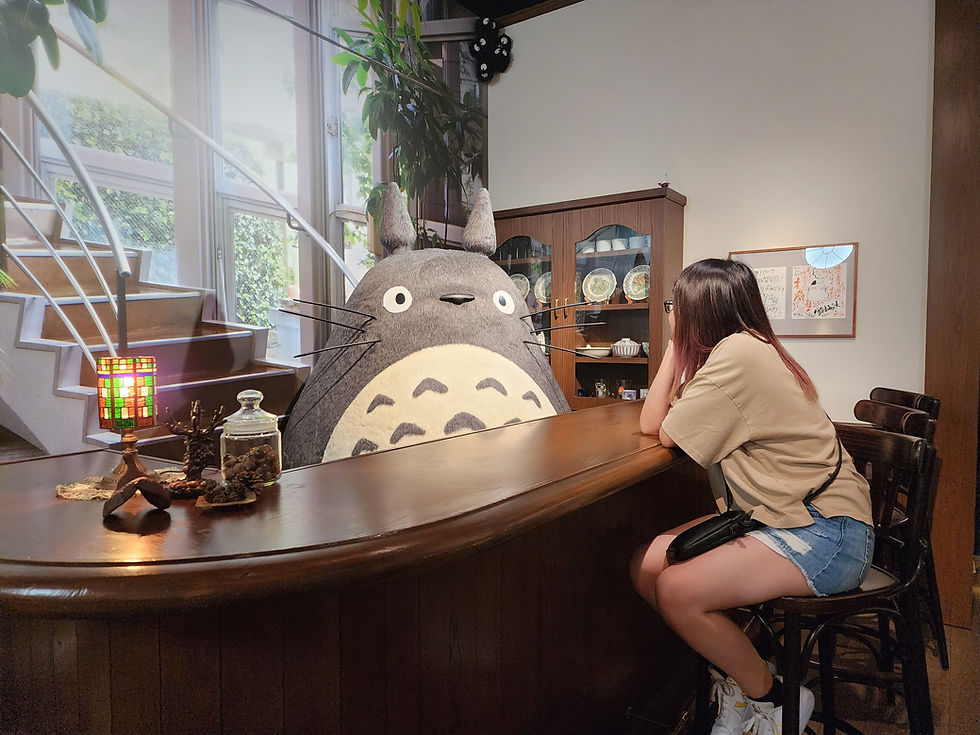
Photo opportunities are endless in the Ghibli Grand Warehouse!

So if photos are important to you, you may want to consider the Warehouse instead.


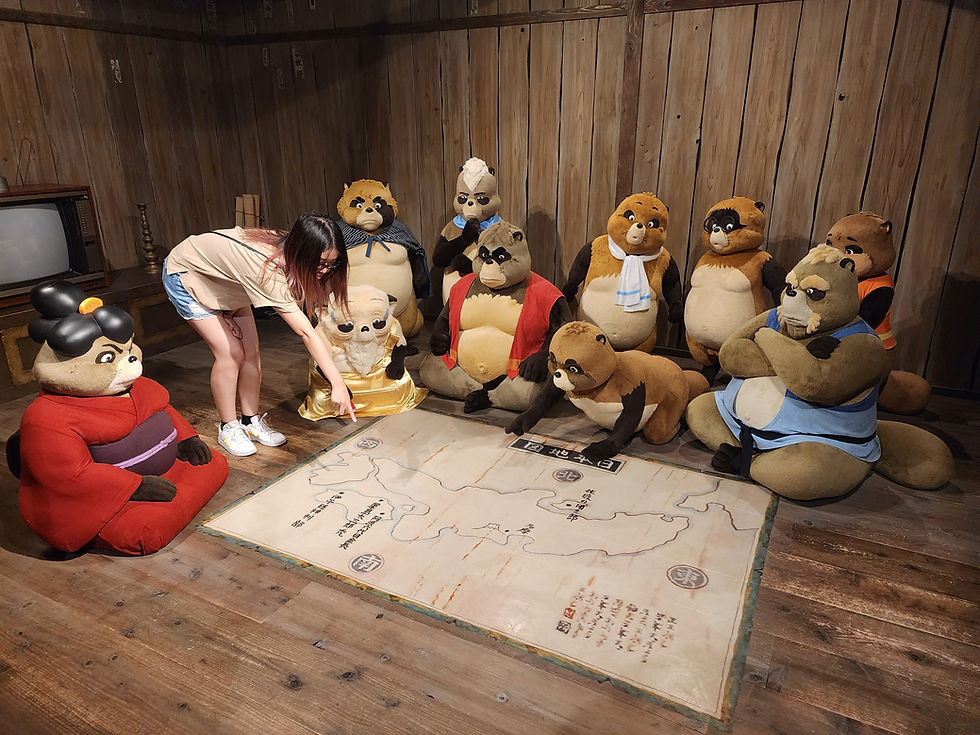
The contents inside the Warehouse is much more varied too. As the name implies, there is a warehouse in the facility that houses a bunch of old school props - which I think fans will enjoy seeing. It's not a big storage, but you might be surprised to see what you can find in there.


The biggest difference of course is that the Warehouse is a part of a larger park, as I said in the beginning. There are other areas you can gain entry into that's more specific to a certain title of Ghibli. And those are all mostly outdoors.


Prices


If you live/lived in Japan, you know that a lot of these themed things often come with a premium price tag. I'm mostly not just talking about the price tag, but also the goods they sell. For you folks coming from overseas, the prices might still be cheaper than what you can get back home, but as a resident of Japan for a number of years - I have to say Ghibli goods has one of the most insane mark ups compared to say... Pokemon goods, Snoopy, or pretty much any other character goods out there.


Special Ghibli magnets

For example, a normal umbrella costs 1000 yen. That same umbrella with a Ghibli design on it might now be 5000 yen.


Maybe I'm just not a huge enough Ghibli fan to say that's worth it, because I don't know... that is an insane mark up. (feel free to disagree)


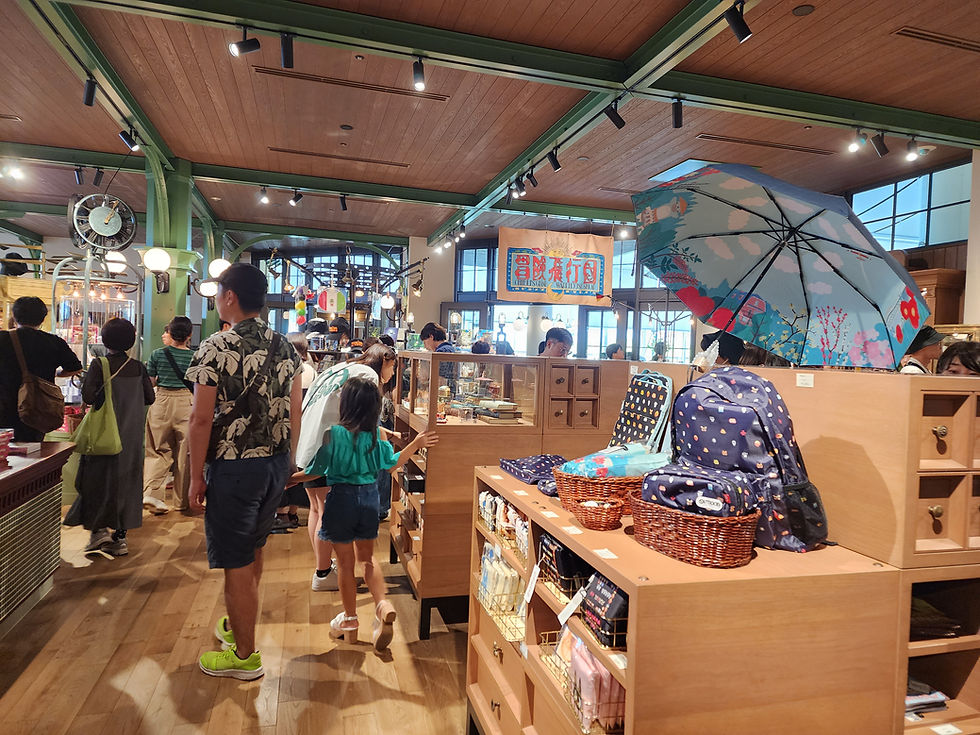
Ghibli Warehouse souvenir shop

But anyway, all I'm saying is that if you're planning to spend at the souvenir shop at the Warehouse - which is probably one of the biggest Ghibli shops I've ever been inside (and trust me I've been to a lot) - be prepared to SPEND.


The Queues...


In line with our theme of "insane"... the line up are, of course: IN.. SANE.


Warehouse entries are all timed. You choose a time to enter. So of course so does 100s of other people. And those 100s of other people, maybe along with some several 100 who arrived a tad bit early, are queuing or waiting by the side to enter into this Warehouse.


I bought one of the earliest entry tickets, not knowing how long it would take to roam the entire Warehouse and I wanted to make sure I still had the rest of the day to do other things in Aichi (I drove as this was part of a bigger trip towards the Aichi coastline, which I hope to write about next!). I believe it was a 10AM entry.


Of course, I had already planned on arriving early because I know Japanese people and their habits - they're not afraid to line up and they will do it early. After all, if you're on time, you're basically late in Japan. And I ain't risking not being able to enter at all. So I got there at around 9:30AM?


We parked pretty close to the Warehouse location. I'd been here before and I had a vague idea of where the Warehouse was going to be. It was still a good 5-10 minute walk from the parking lot to the entrance. If you're taking public transport, the walk is quite a ways away and I'll talk about that in a bit.


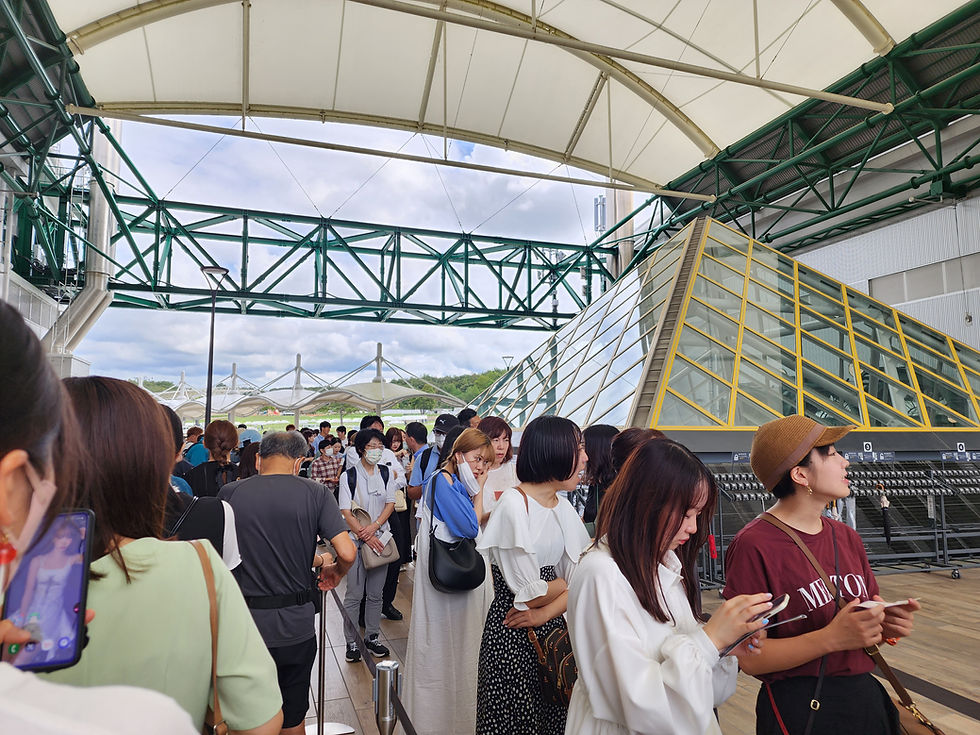
When we got to the entrance, there was already a line formed that was 3 snake curls deep. This was maybe 20 minutes before the place even opened. This means there's people who had been here at least an hour earlier to queue for this. Even with a ticket. The only good thing is that the queue is away from the elements, so there is shade but you're still outside in the summer heat if you have decided to start queuing early.


The queue to enter when I was there...

But is there even a plus side to queuing early?


Why not just show up with a ticket at the time allotted?


You're actually kind of right. There really isn't that much benefit. The only thing I can think of is if you're literally the first batch of people to enter like I was, it may save you some time from more queues INSIDE.


Oh yeah, there is definitely one more area where you will need to queue.


When you immediately enter and turn right, you may or may not already see this queue happening.


The other big queue inside Ghibli Warehouse

I won't spoil it with photos, but this is essentially the queue to take a photo with No Face on the train from Spirited Away. It essentially leads you to a larger photo ops area with most if not all the Ghibli titles - but here is my brotip for you because I have seen people do it.


If you're not that keen on taking a photo with No Face, you can actually just go to the front where the entrance is, ask politely to enter to see the other photo ops and explain you don't want a photo with No Face. They will let you skip the queue (at least when I was there they allowed it and the staff actually encouraged it at the front of the line). There were at least a few couples that did this when we were there.


Make sure you do go inside here because whether or not you do want photos, you'll be missing out of these highly detailed displays if you don't go:


The bottleneck is mostly where No Face is, so skip the line or don't be discouraged! Make the most out of your buck while you're there :)


Other queues inside might involved just slowly following through traffic through narrow areas or waiting for other interactive photo op areas. Another place you'd want to keep track of is the short film screening. Head to the theatre on the top floor and see when they do the showings so you don't miss out on it. There won't be a line for this, but people will be in this little "waiting area" just before doors open to get a good seat, so there that too.


All in all, if you're used to the ways of an amusement park in Japan, this won't be anything new. But if you're a tourist not knowing the language, this can be a little overwhelming and overly orderly. (but now that you've read this - you know better!)


Park Size


This park is HUGE.


That's really it. This park is absolutely massive. If you're arriving by the monorail from Nagoya, you will understand the sheer size of the Expo Park once you start your trek into it. Make sure you leave plenty of time to walk from the station to the Warehouse if that is your first destination of the park. Even if it isn't, still leave plenty of time to walk because none of the Ghibli areas are actually close together, the further being the Dondoko Forest.


Just... prepare plenty of time to walk between areas.


Prepare to walk in general. LOL.


The entrance is the clock tower :)

The distance though means that the areas are quite decently sized too and creates a more immersive experience in my opinion.


Overall: Should You Go?


Casual fan or die-hard fan, I do think this park is worth putting on your travel schedule to visit. I wouldn't try to squeeze it and go out of your way for it unless you are on a journey to see all things Ghibli - but if you've have some extra days in between going from Tokyo to the west end of the country or back, consider this park as a pit stop. Or just Nagoya in general.


There are a few other kid-friendly things to do Nagoya like the train museum and Legoland, so if you are up for the extra few steps of walking.


If you are a die-hard Ghibli fan, check out this Thatch guide I put together of all the nationwide tourist attractions of all things Ghibli:


I personally really just enjoyed taking photos of everything and seeing everything probably to the size that it's suppose to be.


What about you? Have you been to the Ghibli Warehouse or the park? What are your thoughts?


© 2019-2021 by Kansai & Beyond

bottom of page