
top of page
  • Twitter
  • Instagram
  • Youtube
IMG_20201016_111734.jpg
Kansai and Beyond LOGO b+w big.png

Daily Life

Want to know what life in Japan is like? Read more about it here on my posts!

Teaching

Interested in working in Japan as an ALT? I've got you covered! Read more.

Travel

The exciting part of living in Japan is getting to travel through this beautiful country. 

Tips & Tricks

Other posts on food, art, culture, daily rambling, rants, etc etc...

Subscribe to Kansai & Beyond for updates!

Thanks for submitting!

Search

I think we all have experienced that high when you finally received your job offer from JET, Interac or wherever you had interviewed for. That feeling of anxiety but also excitement. That feeling of getting the email and going, “what next? now what?”.


Here’s some of my tips for you to (hopefully) ease your anxiety a little bit.


Don’t Bombard Your Company with Emails!!!

Breathe. You‘re probably not getting timely emails because they are emailing you from a different time zone, and/or it’s probably something they don’t even have an answer to yet.


If it’s about your placement, it’s very likely that dispatch companies like Interac won’t know until the very last minute whether or not that have a contract from the Board of Education (BOE) to give you. Many dispatch companies usually bid for the same BOE contracts, and the decisions don’t get to your company until up to one month before the start of a term (either April or September). Even if they know, they are probably trying to organize hundreds of other people overseas, current employees who may be relocating and displacing current employees into different areas of the region.


Of course, if your company hasn’t responded to anything, you will definitely want to follow up. But emailing your company 5 times a week isn’t going to make your answer magically appear if they don’t have one in the first place.


Bring Deodorant!!

Seriously. Japanese deodorant doesn’t do anything. I’ve been in Japan for 5+ years and have tried to switch to J-deodorant, but other than having the cooling effect, it doesn’t do anything to prevent you from being less smelly. I still use deodorant from Canada to this day.


Get Your Documents in Check

If you have extra, physical copies of your school transcripts, diploma and other certificates that you cannot access online and get official online copies of, scan them and take them with you on a USB or computer (if you’re taking one with you). Whether you plan on switching jobs in the future, you may end up in a situation where you are forced to, and having digital copies of these things will help you secure the interview for that new job. I was never asked for official copies of these things, but some jobs want prove and just to see it - so having a digital copy sped up the hiring process for me quite a bit.


Notify Appropriate Government Entities

I’m giving examples here as a Canadian, so please note that things will & may be different in your home country.


It’s definitely not a necessity in Canada, but if you don’t want to be charge tax from Canada’s side of things, you may want to pop in and declare yourself a non-resident (there are disadvantages and advantages to this, so please make sure you understand what you’re signing up for before you do this) before coming to Japan. Likewise, for your own safety, you may want to join the Registration of Canadians Abroad. You will be put on a mailing list that will warn you of any travel advisories in your new country, and they will also have information about you and your emergency contacts should anything befall you. I always receive emails from this website when a serious Typhoon hits Japan, and during the entirety of COVID19, I get occasional emails about available flights that still fly in and out of Japan from Canada.


Don’t Overpack! Tips on Packing.

You mind is probably rushing towards what kind of teaching materials you should take with you to aid you in your classes, or what kind of clothes you should take with you for work... or what kind of gifts you should give to your new coworkers in Japan.


The former really isn’t necessary because you’ll probably be using online resources more than anything. If you want, definitely prepare for an intro lesson about yourself. But I wouldn‘t worry so much about other materials.


Clothes is... for some of you may need to ponder more on than others. I’m sorry to say, but if you do have a big body frame, you definitely may want to prepare more clothing from home. Most stores here in Japan fit more of an average Asian body frame. “Free size” clothing is more common than back in Canada. Same with shoe size. The bigger your feet, the more difficult it will be for you to find shoes.


Gifts! The easiest thing is just to bring food. Seriously. Pack lots of snacks you are used to eating from home. Even if you don’t plan to give them out, you can always eat them yourself so you get a taste of home. It would be best if you can get things that are individually wrapped to share, especially now during COVID19 though (at the time of writing)


Learn Some Kanji (For Beginners)!

I think a lot of people obviously want to study Japanese as they haven’t before, and some people even try to cram a bit of basic hirakana and katakana before coming. But put it on hold. Instead, I implore you to start remember some Japanese kanji instead. Like days of the week, numbers, food/drink items, toiletries, etc. It will probably give you less culture shock to be able to recognize some commonly used Japanese kanji while walking down the street or looking at the menu. For example you might know ‘chicken’ as ‘にわとり’ (niwatori) but you’d be hard pressed at a supermarket to find those Japanese characters. You’re more likely to see ‘鶏‘ or ‘鳥肉‘ in the meat section (I mean, how it looks should give it away... but you know what I mean).


Making Friends


My final tip has to be about making friends and feeling like a sense of belonging here.


Myself included, I know some of you will be quick to try and make friends with the people in your immediate surrounding. After all, you’re all in the same boat, experiencing Japan in very similar ways which bring you together. You all have to recreate your new social support system, and they seem to be the easiest place to start. But please don’t feel like you NEED to be friends with those people. You don’t need to be friends with everyone!


Sometimes those aren’t the people you really should be friends with.


Of course, it’s very possible that there is someone in your immediate surrounding who you really click with, and that’s great. But it doesn’t work out that way sometimes, and it will be scary to break away from the drama and anxiety-inducing situation - but I promise you will be fine.


Use that time to branch out. Look for some organization or association to be a part of, see if you can join in on some new hobbies related to Japanese culture or join some meetup events (if you are in a big city). Someone is bound to take you under their wing. Try not to let your loneliness cloud your judgement.

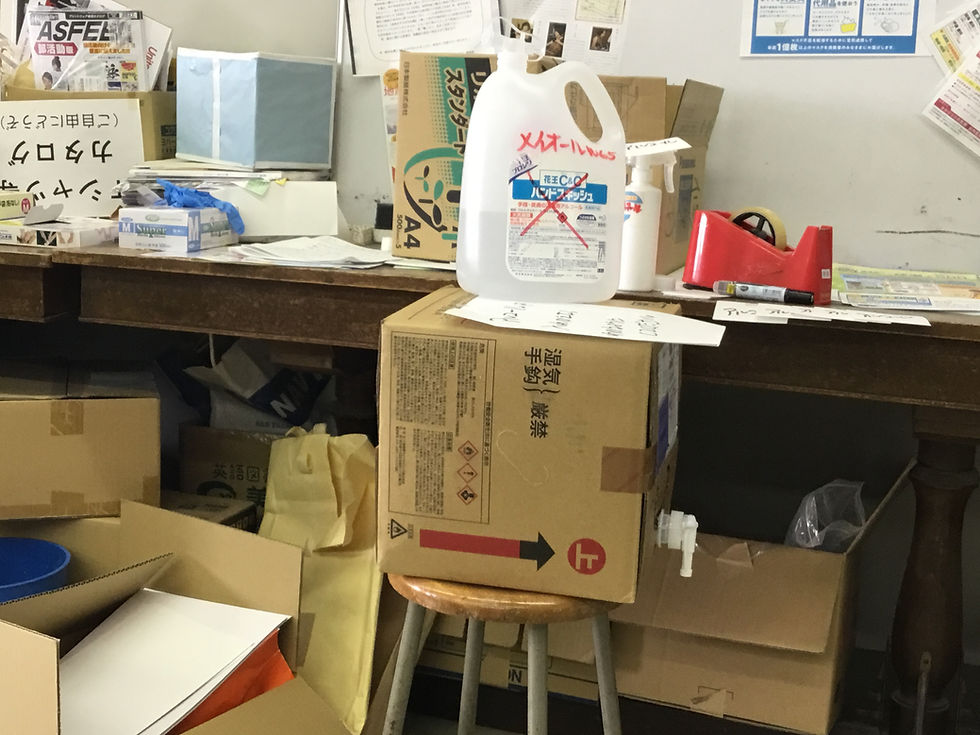


(I honestly don’t know how many people would be interested, but I want to document how my school in Japan is handling school after the state of emergency. Please note that this is my PERSONAL experience, and does not mean other schools in Japan have taken this approach as well.)


Even before the state of emergency, my school had already instated a work-from-home (WFH) policy with some caveats. Each grade must still have one homeroom teacher physically at the school to take calls every day from students and parents (how they manage this is up to the grades), but most teachers and staff are encouraged to stay home.


When the state of emergency was in full swing, most teachers were already practicing WFH. The only teachers who were going to school were the principal, vice principal and a teacher from each grade. They were encouraged to not stay for more than half a day, so teachers rotated shifts as necessary.


Two weeks before the state of emergency was lifted on June 1st, my school in Hyogo Prefecture (Japan) had already been drafting plans to start school back up. My school was not closed indefinitely; they were always on their toes and pushing the start date of classes to a predetermined date. This allowed them to prepare to start, but also cancel if things went south.


There were two plans, but this was ultimately the plan we implemented:


  • The first two weeks of school will both be the A schedule (my school has A and B week with different rotation of classes)

  • For the first week, students with odd numbers (student numbers) will come in the morning. Even number students will come in the afternoon.

  • All 6 periods will run as usual, with shorten periods.

  • There will be a later start time.

  • For the second week, even number students come in the morning. Odd numbers come in the afternoon.

This is done to reduce the number of students in the classroom. If a class had more than 20 students at a time, plans were made to place that class in one of our bigger classrooms/multi-purpose rooms.


This meant that students would only attend class for half a day, doing a full week of class in a two-week time frame.


Disinfectant for teachers to clean the desks after each switch-up of students.

Homeroom teachers are asked to disinfect the desks after each switch-up. Gloves and face covers are provided for teachers to take freely. Disinfectant is placed all over the school and students are discouraged to do group work or pair work for the time being (usually at the discretion of the teacher though). Classroom windows and doors are left open during lessons for air flow.


Classes have been interesting. There’s no visible changes other than class size, but it’s more difficult to keep track of which students you will see and where they left off last class. Obviously you also have to try to make sure classes end is around the same spot, so when they all come back together again, they will be on the same page.


Students are also required to submit their temperature and any symptoms they may have that points to COVID19 before classes every day to their homeroom teachers and school nurses.


If students suspect they may have caught something, they are required to stay home. Students with a fever are also not allow to join classes (if they already made it to school, then they will go to the infirmary for parents to pick them up if far or go straight home).


School events like our school cultural festival was cancelled due to COVID19, and there has been no plans to hold any of the performances in private or another time. There were talks of clubs like the drama club and chorus club to record their performances and distributed to parents, but there has been no official word. I believe this would be up to the discretion of the club advisors in the near future.


School years in Japan start in April, with the first semester ending in July. Our school has effectively pushed our schedule forward, which means summer vacation will mostly be slashed other than Obon week holiday. The semester will likely end some time mid-August instead.


That’s about it I can think of.


What is your school doing differently after school shutdowns? Do you feel a change in your environment now?


Even before I applied to work in Japan, I knew the concept of a "nomikai". For those who may not know, this term refers to drinking parties. This is very common between friends during your free time or simply after work between some of your closest coworkers. When it is work related, it is usually done with your boss(es) and coworkers to celebrate a period of hard work that was accomplished.


Now for those who drink, this is probably paradise. Especially when the menu includes all-you-can-drink.


For non-drinkers, the prospects of this can be very daunting. I don't know about you, but in Canada, there is always that one person you barely know in a party with all the booze peer pressuring you to drink. Even when you say you can't (for whatever reason).


I actually happen to be very allergic to alcohol. One sip of plum wine here in Japan, and just like clockworks, 5-10 minutes in you'll see me in front of a toilet puking it (and anything I've digested before) out. For chu-hi, give or take 5 sips to get the same effect. TMI. I know.


But you get the point. Not everyone (especially me) can drink, whatever your reason may be.


Thankfully, there really is no REAL pressure to drink here despite my expectation of what nomikai are suppose to be like. People are generally quite understanding, even without you trying to justify yourself.


However... you might still feel like you are obligated to, or have a bunch of people try to pour you a drink and you're not sure how to navigate out of it respectfully each time. But there are a few surefire excuses you can use here in Japan. Especially if you get the excuses right. Sure, you MAY have one guy who is drunk out of his mind just basically trying to get everyone (and you) to drink, but it is much easier to get away with it.


The number #1 excuse, even among your Japanese friends and colleagues, would be to tell everyone you must drive or bike back home after the party. There is zero tolerance for driving or riding a bike under the influence, unlike in western countries where a tiny bit of consumption might be ok. So people who may be designated drivers, or have to bike home, simply can't or don't drink.


I find that people are also quite tolerant and accepting of the idea of an alcohol allergy. In the west, people MIGHT believe you if you go into detail (just as I did earlier) about the severity of the allergy. However, I think alcohol allergies are more common among Asian/Japanese so people often understand it's serious and won't pressure on. Of course, if you are from a country that is known for parties and drinking, this excuse would probably backfire on you based on those stereotypes alone.


Zero alcohol beer is also pretty common on the drink menu, and I find people who don't drink and is easily influenced will partake in this beverage. I sometimes will just pour myself a glass of zero alcohol beer for toasts during work events and such, if I really have to. Otherwise oolong tea does the trick really well.


If you are a non-drinker, have you ever been pressured to drink with your friends/coworkers here in Japan? How did you get out of the situation?


Comment below to share your experience!


© 2019-2021 by Kansai & Beyond

bottom of page