
top of page
  • Twitter
  • Instagram
  • Youtube
IMG_20201016_111734.jpg
Kansai and Beyond LOGO b+w big.png

Daily Life

Want to know what life in Japan is like? Read more about it here on my posts!

Teaching

Interested in working in Japan as an ALT? I've got you covered! Read more.

Travel

The exciting part of living in Japan is getting to travel through this beautiful country. 

Tips & Tricks

Other posts on food, art, culture, daily rambling, rants, etc etc...

Subscribe to Kansai & Beyond for updates!

Thanks for submitting!

Search

Updated: Oct 17, 2021


If you are not confident in your driving, ask for this 🔰 "beginner mark" or shoshinsha mark (初心者マーク)

If you don't speak Japanese (or at least, not well) and/or you don't usually drive a car back in your home country, the thought of driving in Japan probably terrifies you - just as it did with me. However, when you do finally get the nerve to do it, your instincts will absolutely kick in and it will be worth it!


This may be your 2nd or 3rd time traveling to Japan, and you want to really get out of the big cities to explore in your own pace. Or maybe you're traveling with a small group of friends, and wanting to save/share costs on transport. Whatever the reason, here are some things to think about before you decide to rent a car.


1. Driving Between Places CAN Be Slower and More Expensive Than Just Taking the Bullet Train


On major routes like Osaka to Tokyo, and Tokyo to Sendai where there are frequent Shinkansen service, driving non-stop between these routes can actually take you much longer than just riding the Shinkansen. The roads and highways along here run between densely populated cities, so it's very easy to get caught in a traffic jam or road block.


One way drop offs, if they allow it, will always be much, much more expensive than dropping off in the same location you picked up from. Most car rental companies don't usually offer one-way drop offs outside of their "region" anyway (Osaka in Kansai region, to Tokyo in Kanto region)...


If you are trying to get from Osaka to Tokyo, and want to do pit stops, it maybe more affordable to do a one day or overnight car rental at the pit stop city/town and then hop on a Shinkansen to do the journey between Osaka to Tokyo. Of course, always do your own research!


2. Drive With a Friend, If Possible


Especially if this is your first time driving overseas, you drive on the right side in your home country, and you have zero Japanese language skill, I highly advise against driving alone. Most signs in Japan have English, so it's not too difficult there. However, it's always nice to have a friend as the navigator to remind you to keep/stay left, or to look out for some narrow Japanese roads you have to turn into.


3. Remember Some Japanese Lingo and Rules


The two you will absolutely want to remember is 左(ひだり hi-da-ri) which is left, and 右(みぎ mi-gi) which is right. The JAF has a good website on other common signs you'll see on the road and some rules on the road which will be different than your home country. One in particular is the "stop sign" that say 止まれ on it. Sometimes this 止まれ will appear painted on the road with white paint, and a white line - which also acts as a stop. So do be careful!


4. Drive Defensively


I think this is just a general driving tip in general, but I think this is really important in Japan. There are a lot of narrow roads in Japan, lots of pedestrians and lots of cyclists or people on scooters - it's very easy to get into accidents in big cities where all these things exists. If you're used to driving in big cities, this will be a breeze -


BUT PLEASE REMEMBER: if you get into any sort of accident, even if it's not your fault (eg, cyclists rides out on a red light and you hit them), you can still get a small percentage of the blame for not being careful enough. So prevent yourself from getting into trouble in the first place, and drive defensively.


5. Save Phone Numbers of Places You Want to Visit


This isn't for calling! Though it wouldn't hurt to look at what some emergency numbers in Japan are. Here you go.


Before your trip, go on google maps and check to see if the locations have a phone number attached to them. This is so that you can use the GPS in your car. You can input phone numbers into the GPS and they will 80% of the time pop up as the location. Sometimes you may end up with a phone number that doesn't work, or they may send you to the City Hall or some general facility. So double check as you are inputting the number. If the location doesn't have a number, a nearby cafe or restaurant will probably have one. So you can use that.


Inputting addresses require you to know Japanese, as you must enter them as such. I think most people will opt to use their phone to navigate, but I personally still like the in-car GPS more as it's easier to see.


6. Patrol Cars With Flashing Lights


In Canada, if a cop car is behind you with flashing lights, it usually means they're onto you and you need to pull over. This isn't the case here!! If you see a cop car following behind you is flashing their lights, do not panic and stop. Keep driving (safely). This does not mean you are in trouble. Patrol cars here seem to all have their lights on when they are on the move, so this does not mean you are in trouble.


However - if you do hear sirens blaring, and they are using their loudspeaker behind you, chances are they are after you and you should stop then.


If you are using the tolled expressways, you may see some NEXCO cars/vans that look like patrol cars (flashing lights & all). They're not cops. NEXCO is the entity that does maintenance on the expressways. So just keep driving and follow the traffic, and you should be fine!


Last tip for my fellow non-drivers (but have a license). If you are terrified of the fact of other people on the road, like myself - pick an island like Shodoshima (Kagawa Pref) or Ishigaki (Okinawa Pref) as a practice run. These islands are usually big enough with some wider main roads, and there's guaranteed less traffic and people. Less things to worry about!


There's also no toll roads on either island, so you can't accidentally get led onto a speedy toll road that's out of your league (though that's usually fixable as you set your GPS and choose the "ECO route").


Our rental car in Okinawa.

On Ishigaki at least, which was my first drive in Japan, people are generally more chill and aren't in a rush to go places, so it wasn't all too stressful for a first-time run in Japan as long as you're willing to drive above the speed limit at least a little.


Lastly, your rent-a-car company should have some English pamphlets of Japanese rules and emergency numbers to call if you get into accidents, so ask for them if you are unsure. It should all be explained to you before you hop into your car, so make sure you understand the basics before you head off onto the road.


This is not meant to be a comprehensive guide to driving or anything, but some of my own observations in a car while taking numerous trips around Japan.


If you have driven in Japan, what are some of your tips on the road here?


In a previous blog, I wrote about the Takeda Castle Ruins and how to go about visiting it. Today I want to share about the town itself, and the Former Old Kimura Distillery, now turned into a hotel for tourists visiting Takeda.


I will try to do less talking/explaining for this post, and more of a photo blog type post.


However, I do want to share my overall thoughts on my stay at the Former Old Kimura Distillery, aka The EN Takeda Castle Hotel.


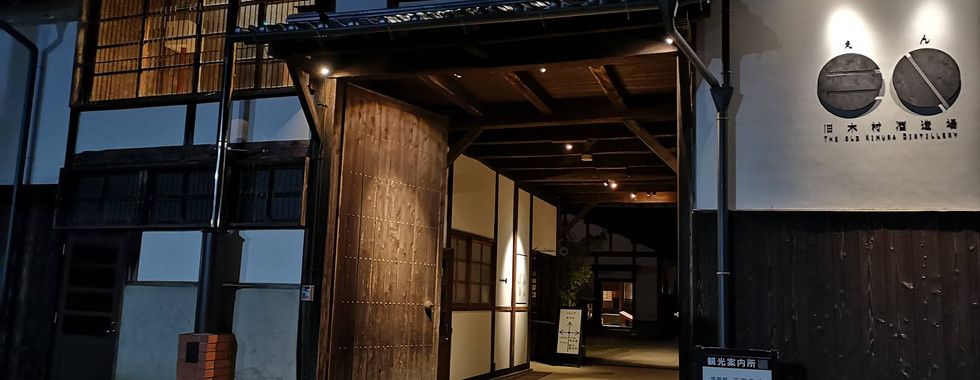
The EN Takeda Castle Town Hotel is located just a few minutes walk from JR Takeda station, just at the end of the main road. It is a building that's quite difficult to miss, due to the size and land mass it takes up. However, the entrance to the hotel isn't all that obvious if you are on the same side of the street and surrounded by other traditional Japanese houses down the main street.


The entranceway garden, and also where the private baths are to the left of this picture.

I had actually entered through the wrong way, as I didn't notice the doorway that had said "hotel". I found my way into the museum/grounds/storage/inner part of the hotel by accident, and entered through there instead. Oops!


However, the staff were all extremely kind and welcoming. They greeted me warmly and told me I was too early for check-in, but was able to leave my belongings with them while I went to Takeda Castle and explore. So I did.


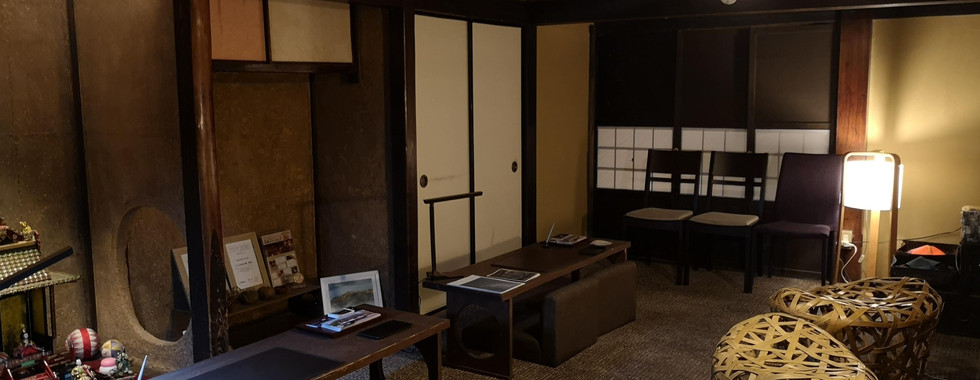
When I returned for check-in, they sat me down in their reception area. Another family was just finishing up their check-in, and seemed to be the only other group I would be staying with inside this hotel (as I didn't really see other guests that night). The staff member in charge of checking me in explained to me a bit about the hotel, and that besides their main building, they had other rental "machiya" (traditional Japanese wooden houses) that guests were able to rent out. These machiya were scattered along the main strip I had walked through from the station. Whilst explaining, another staff member had served me up some welcome treats and drinks - which I gladly partook in. After a few more things to take care of, the staff asked me to pick out a toiletry bag, all of different patterns and designs. I chose this one and my yukata for the night:


When I was all ready, the staff member showed me to my room - which was just down the hall from the reception area. Very close! She explained to me that my room used to be part of a hallway in the Distillery, which is now made into a room. She then showed me how to lock my doors and told me to careful of the step down to my room, and then took me on a brief tour of the main building.


Just before heading to the public baths, we came across this door. Which to my surprise, was another room! Pretty neat!


You had to briefly step outside to get to the public baths and the dining hall, which was across the grounds of the main building.


Public Bath
Dining Hall

And that concluded everything that I needed to know for my stay. The staff member kindly reminded me of the number to the front desk, and left me to explore and enjoy my room.


The closet... which has the coffee machine inside. Very important!
The door to the bathroom...
Bathroom with toilet.
The view of the grounds, dining hall and Takeda Castle in the back.

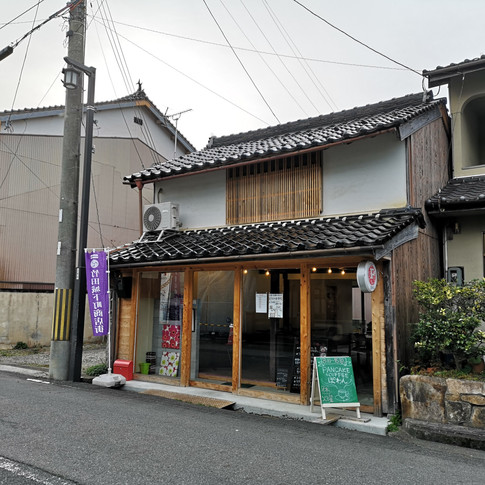
Since I did not have a dinner plan, I went back outside to properly explore the town. And get some light meal. Not too far from the hotel, there are a few food options like okonomiyaki, izakaya and a pancake cafe called Powan. I opted for the pancakes. Nothing like all-day breakfast, right?


With a full stomach, I went to explore the neighbourhood. Behind the hotel, there were actually some very interesting homes.


(click the arrows to scroll) A few of these homes have a water drainage canal/gutters that have the koi fish swimming in it. That surprised me as I knew a few other towns like Gujo Hachiman were famous for this, but I did not know Takeda had built these canals too. Which was a nice welcoming surprise to see.


More koi fish in the gutters and water drainage.
A super low path just right underneath the train tracks, if you want to get across to the other side.

To be honest, there isn't much to do in the town. There are a few hiking trails, but in terms of entertainment, this isn't the place for it. Which of course, makes it a great place to just relax and wind down from the city life.


After exploring the neighbourhood, I returned to the hotel to explore the grounds a bit more.


(click the arrow to scroll through the pictures) If you looked into some of the buildings, you can still see some of the tools they used back when it was a distillery. They have an open museum part in the main building, which tools and equipment left behind from Distillery. Unfortunately I wasn't able to some good pictures for that though (sorry!)...


Just as night fell, I partook in the public bath (nothing to ring home about, unfortunately), did a bit of work, enjoy the light up of Takeda Castle from my window and went to bed.


The next morning, I after my little excursion, I went for breakfast in the dining hall.


Breakfast in Japanese hotels, as everyone can tell you, is never worth it. But I knew I wouldn't be able to get a good sit-down meal until I get to Kinosaki onsen much later in the day, so I decided to partake in it. While it was definitely delicious, the price of 2000yen for small portions of veggies, fish and lots of tofu-inspired pieces don't seem to be worth it at all.


Here are some pictures of the dining hall, by the way:


All in all, it was a fun stay. I don't know if I would do it again. The price for the overall stay isn't exact cheap (about $200 CAD for one night), and while it was an awesome experience, there was one thing that really bugged me. Soundproofing. Well, lack of it. It was extremely difficult for me to sleep that night as the structure was all just wood... and wood creaks. A lot. If you can afford the machiya in the separate buildings, I think you wouldn't run into this problem at all. But with my room being so close to the reception area, this was definitely an issue.


Overall though, I did enjoy Takeda and I'm really glad I chose to stay a night there. I hope you'll decide to visit as well one day!


Hey everyone!


I know it's been awhile since I continued this leg of my trip blog. Last time I left you on how I stayed overnight on Okunoshima (Rabbit Island), after traveling into Onomichi for the day. Today, I'll be finishing off this last leg of my trip in Iwakuni City.


After I got off Rabbit Island in the morning after breakfast, I continued west into Hiroshima City. I didn't spend long there - I knew I would have time the next day for another stop over before heading back east. But I did want to stop into Miyajima Island, which I had time for as Iwakuni was only about 30 minutes away by local train from there.


The reason was because I wanted to see the now under construction Itsukushima torii gate.


I've seen it plenty of times uncovered. But construction happened every 100 years and while it's not glorious feat, I figured that's still a something to see, right? I mean, if you put a more positive spin into it... lol.


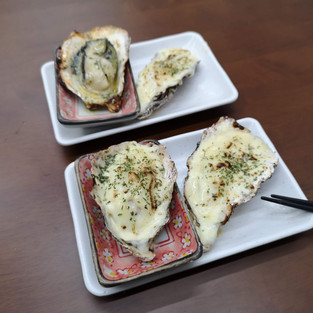
Though to be honest... I really just want to eat fried momiji-manju (middle) and my favourite apple flavoured momiji croissant (right). Can't forget those grilled oysters with cheese and mayo, and garlic butter either (left). Yummmmm.


And that I did.


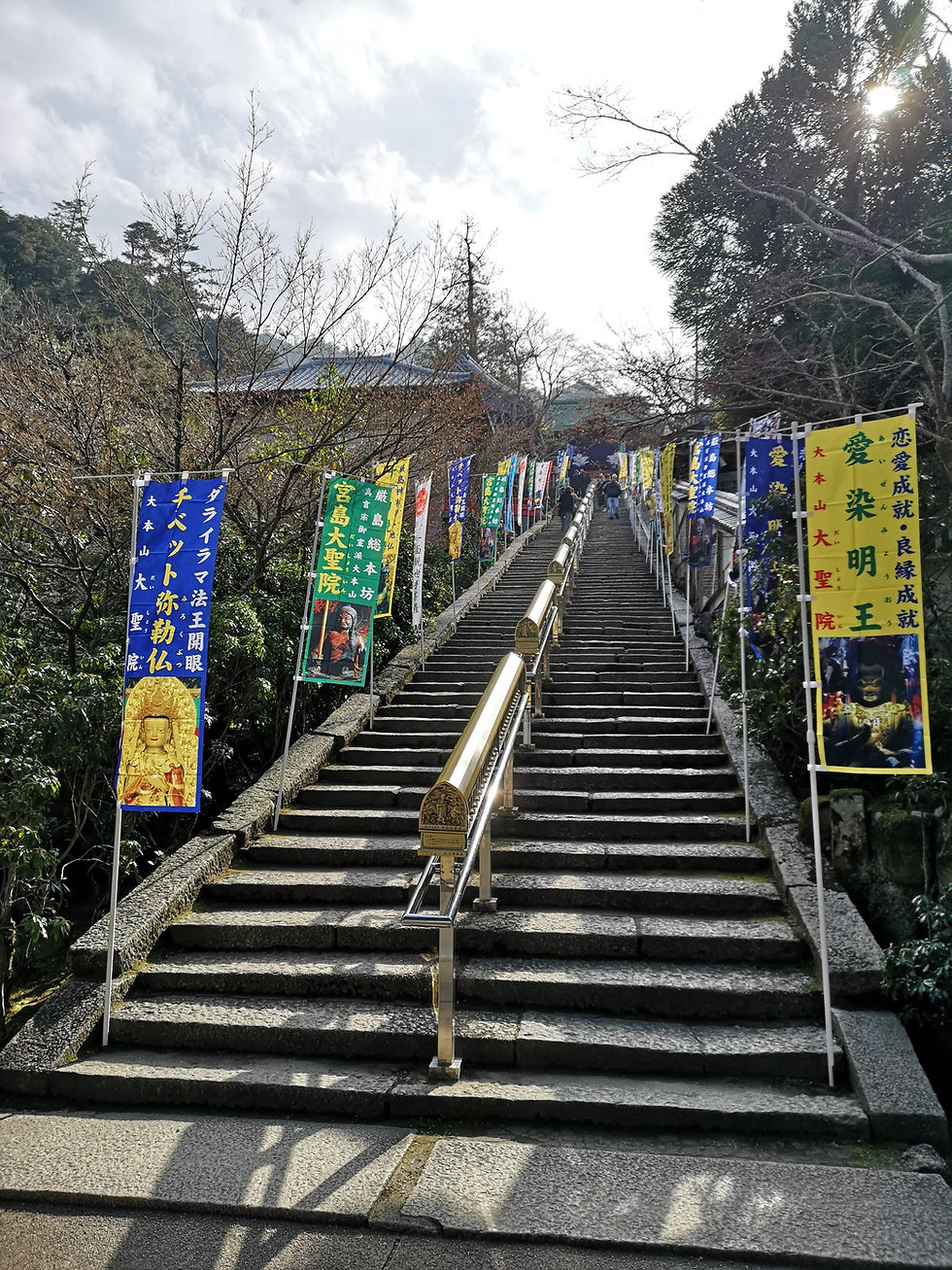
After a light lunch, I braved some steps up to my favourite shrine.


I enjoy hiking up Daishoin to see these little statues. They are scattered all around the shrine. And there are literally thousands of them. They have the traditional ones (right), but lurkering the shadows, you may find a few ultraman ones too (left)!


After saying farewell to this deer who clearly wants in on the oysters too, I finally moved onwards to Iwakuni - our final destination of this trip.


This was new territory for me, as I had never officially stepped foot into Yamaguchi prefecture. I mean... I did, but I didn't. 3 years ago when I crossed that underwater bridge from Kyushu...... And I have proof!


Proof that I have stepped into Yamaguchi prefecture before. 3 years ago.

That absolutely counts.


But this time, I'll finally be sightseeing for the first time in Yamaguchi prefecture.


I arrived at Iwakuni station around 3 PM, and took a quick bus ride towards Kintai Bridge area, where I would be staying the night. The ryokan I had chosen is the Iwakuni Kokusai Kanko Hotel, which prides itself in the outdoor hot spring it has facing the Kintai Bridge and other surrounding sightseeing spots. The room I stayed at is very minimal business hotel type, but it had everything I need for a simple, no-frills stay.


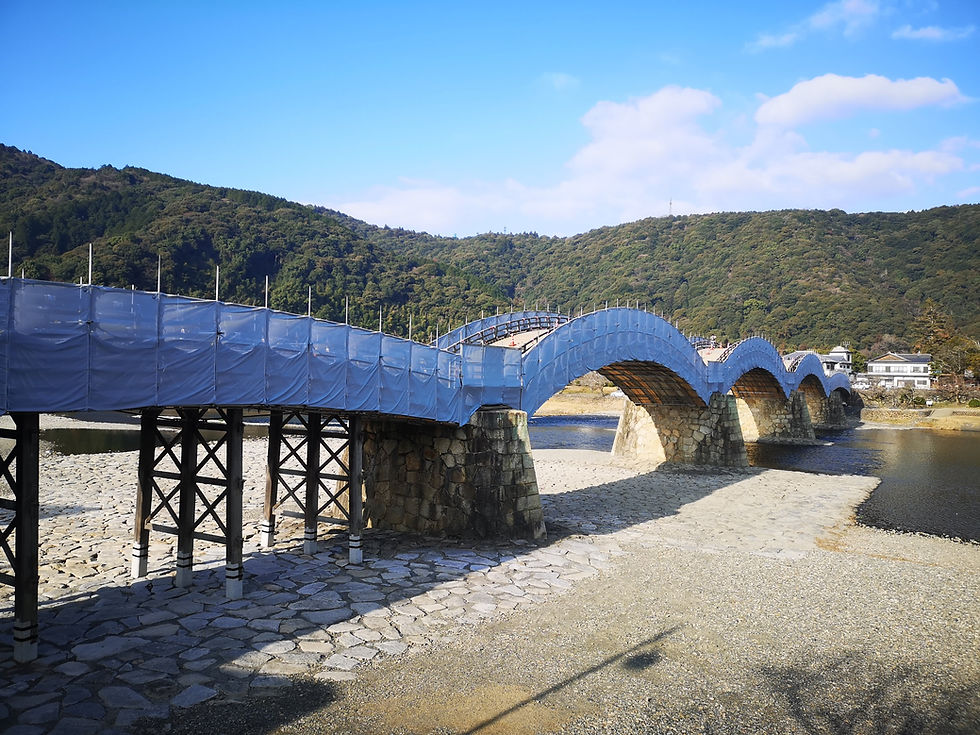
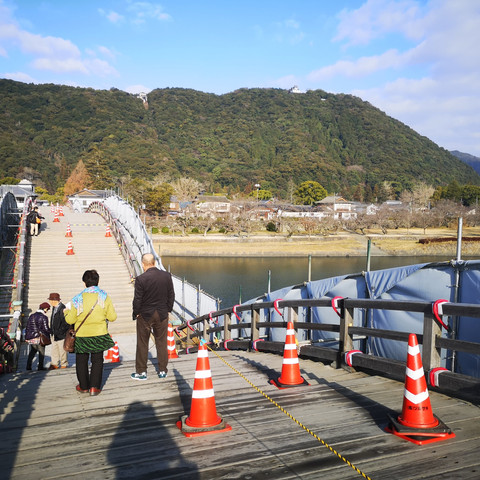
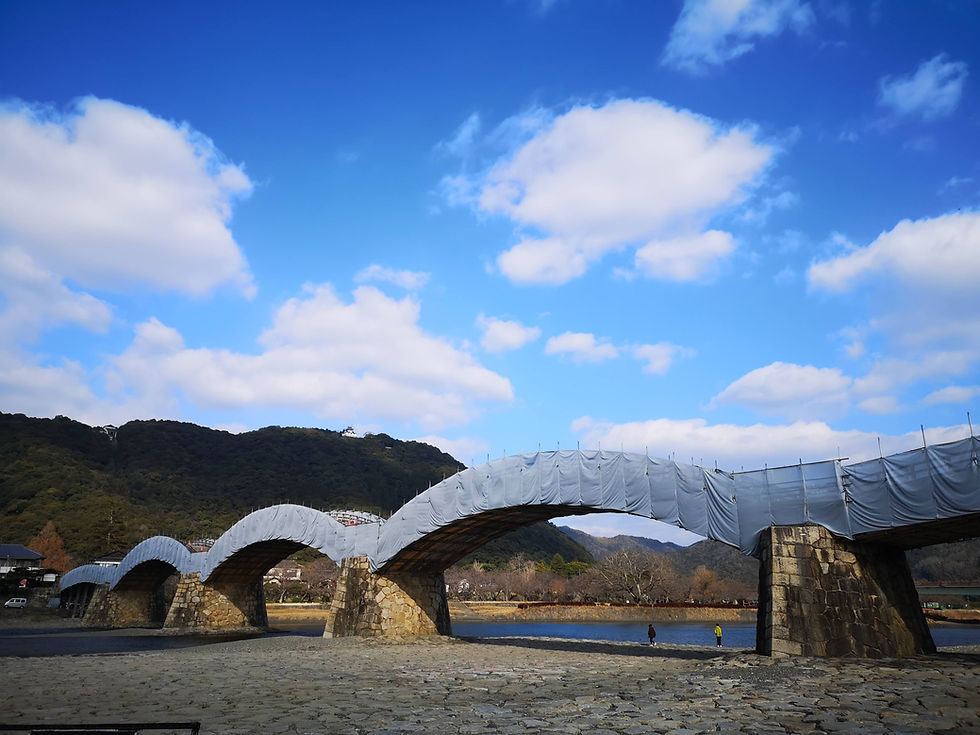
Promptly after the check in, the staff there are kindly shown me to my room and made small talk with me regarding my meals and my plans to sightsee. I had no meal plans with them. I had already prepped some convenience store food when I was at the train station. I told them I was set for the night. The staff then explained that unfortunately, the Kintai Bridge was under construction at the moment, which I caught a glimpse of on my way to the hotel (by the time I release this article - don't worry, the construction will be over). Iwakuni castle was also under renovation, and that I had come at the wrong time. He reassured me though that I could still walk across the bridge, and I can still enjoy the views they had from the hot spring. He wished me a good stay, and went on his way. Very kind gentleman!


After settling in, I took advantage of the daylight and went for a quick bath in the hot spring. I wanted to see how the view was.


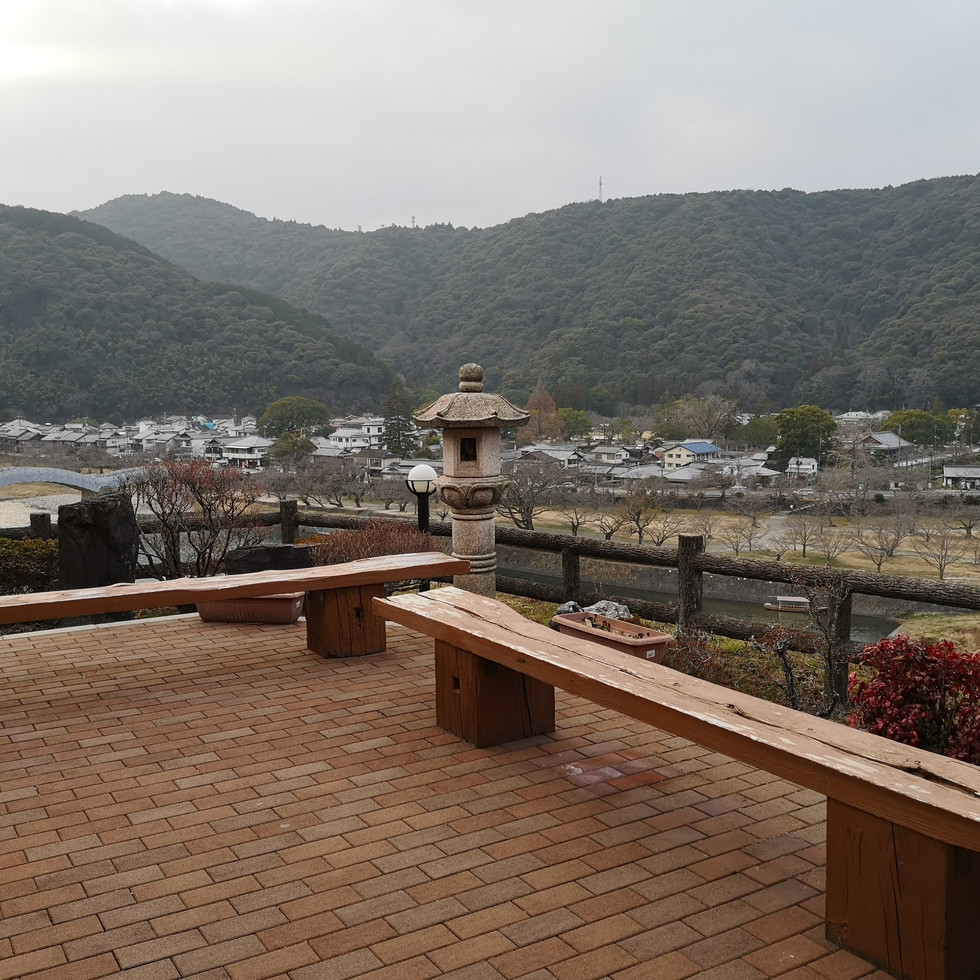
Unfortunately I don't have any pictures of the inside, but I can tell you that the views from the outdoor hot spring was indeed quite spectacular! But here's some pictures of the hot spring and their viewing deck:


The sun was starting to set at this point, and I wanted to walk the bridge and get pictures of the bridge both in daylight and darkness. So I went out for a stroll before dinner. (click on the thumbnails to scroll)


Normally to cross the bridge, you must pay. But I suppose after a certain time, it's simply just a free-for-all type deal. If you want to avoid the fee and you're staying nearby, I recommend going around dusk.


I went back onto the bridge the next day though, since it was sunny and the weather was great for pictures. There I had to pay to cross, and I got to see some workers working on the Bridge. It seems like they were replacing some of the material they had used to fill the cracks of this long wooden bridge - a method they use to keep the structure sound all year round. It was quite interesting!


The reason why I wanted to cross again was because I wanted to explore the other side of the bridge a bit more before returning to Hiroshima, as there are a few attractions there - Iwakuni castle, a few shrines, some hiking trails and most of all, their albino snake museum.


The castle was closed, so that was a no-go. I skipped the snake museum because while I liked danger noodles enough, I didn't want to pay to see them. So I walked around the town a little bit to capture some of the essence of the town and their shrines. (click on the thumbnails to scroll)


All in all, it was a great town. I went during a bad time and good time, quite frankly. While things were closed... it was also when COVID19 had just started to peak in China, just at the beginning of the tourism halt. So I got to enjoy the place with minimal tourists around me. And I really enjoyed my short time in Iwakuni. I would love to return again during peak sakura season, as it seems the sakura lines the river right by Kintai Bridge. Maybe another year!


For now, it's time to go home.


I took a highway bus back to Hiroshima city, which took me to a bus terminal just outside of the A-Bomb dome. Of course, since I was in Hiroshima, you cannot leave the city without Hiroshima okonomiyaki!! (that would be a sin)


And to that, until next trip!


© 2019-2021 by Kansai & Beyond

bottom of page