top of page
  • Twitter
  • Instagram
  • Youtube
IMG_20201016_111734.jpg
Kansai and Beyond LOGO b+w big.png

Daily Life

Want to know what life in Japan is like? Read more about it here on my posts!

Teaching

Interested in working in Japan as an ALT? I've got you covered! Read more.

Travel

The exciting part of living in Japan is getting to travel through this beautiful country. 

Tips & Tricks

Other posts on food, art, culture, daily rambling, rants, etc etc...

Subscribe to Kansai & Beyond for updates!

Thanks for submitting!

Search

Spring is approaching and that means the peach, plum and cherry blossoms are upon us. Particularly now, plum blossom are all mostly in full bloom.


In Osaka, even though we are not famous for these blossoms like Kyoto and Nara are, there are still a few spots right now where you can see the flowers. Osaka Castle is currently in full bloom, and so are the few trees they have at Osaka Tenmangu.


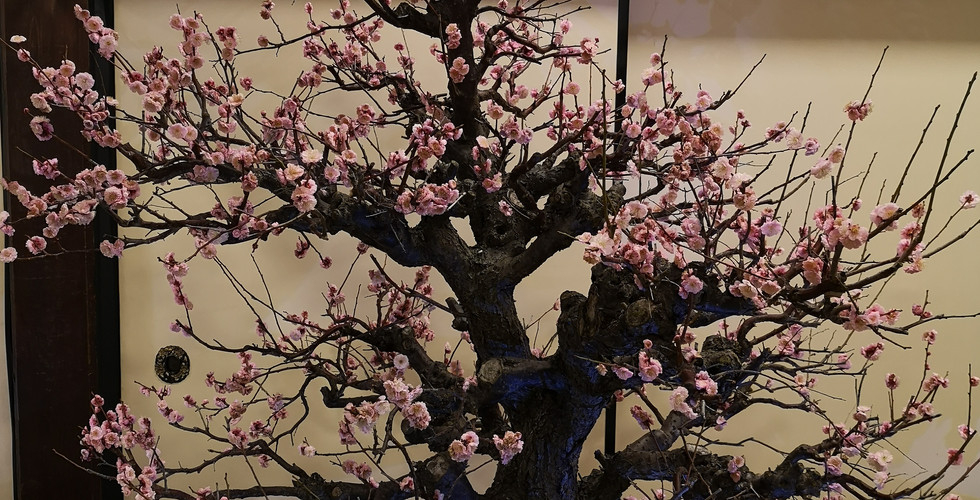
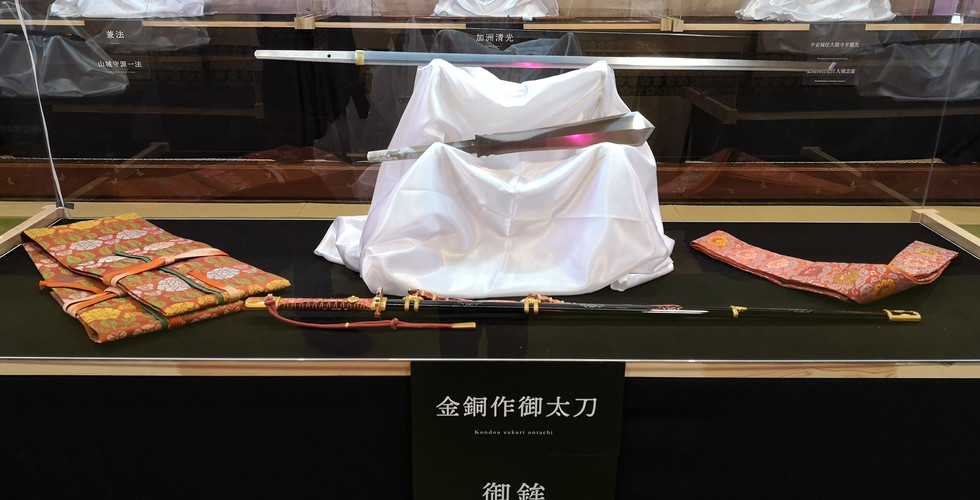
Currently, there is an exhibit for potted plum bonsai trees and swords there.


It is an indoor event inside the temple complex created by xorium, and the entry fee is 700 yen per person. The event lasts until March 8th, 2020 - so go before all the plum blossoms disappear and the event ends.


I went on 2/24 and it was labeled as full bloom. However, there are a number of different varieties and some trees were still in the midst of blooming, so I think it’s still possible to see some flowers next weekend.

There are 4 rooms in total of different plum bonsai of different varieties and ages. Most of them are about 100 years old! A few labeled at 120 years old! That’s pretty impressive. Every 15 minutes, the lights in the room will turn on and off. This is when the lights are on (click the arrow to see more pictures).


And below is when the lights are turned off, with the projections on every wall in every room. Personally, I think it’s much more impressive with the light off, but I think if you’re here to admire the flowers, the light on makes it easier to enjoy and see.


There is a little veranda where you can enjoy the outdoor garden (ruined by the tall buildings, quite honestly), where there are a few plum trees there too. And that is the end of this small exhibit. There is a tiny souvenir shop to buy some local goods.


Outside of the exhibit in the temple area, there are a few plum trees in bloom as well. So make sure you make the rounds around Osaka Tenmangu before heading out!

Where did you guys see spring blossoms? Share your experience if you have any!


(this was written in 2017, reposted again 2020)


During my travels to Hiroshima this time, I took a trip out to a small port town south of Fukuyama, Hiroshima called Tomonoura. Perhaps the name might sound unfamiliar to you, but what if I said Ponyo? Or perhaps, Wolverine?


If you haven't guessed already – yes, this is the port town where the animated Ghibli movie Ponyo took place. Various scenes from The Wolverine (2013) were also shot here. The Japanese drama Ryuusei Wagon (流星ワゴン, 2015) also recently filmed in this town.


The town is a 30 minute bus ride from Fukuyama station.


I took the bus all the way to the last stop, Tomokou. However, I highly recommend getting off the stop before, which is Tomonoura. It stops right in front of the main tourist information center.

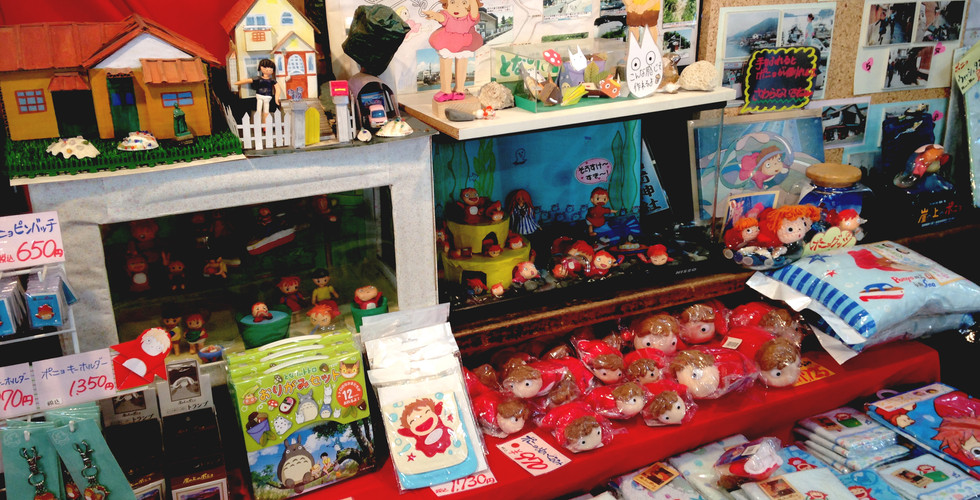
I was greeted by a few people in the souvenir area and eventually a friendly tourist information guide standing behind the colourful Ponyo display.


Upon offering his assistance in Japanese and (pretty good) broken English, I immediately asked him about Ponyo.


I'm guessing tens of thousands of people visit for the same reasons, because he had reached for two detailed colour map in a matter of seconds. The first map was a zoomed-in map of the area. The second map was a general map of the town and surrounding areas coded with numbers, pictures and brief descriptions of how that numbered area is referenced in Ponyo.


I didn't need to ask more. I thanked the guide and went on my merry way.


Unfortunately some areas are quite some distances away from the town. There are about 20 spots on the map that are labelled in reference to the movie. I had arrived in town around mid afternoon from Okunoshima (yes, that is code name for bunny island), so I had to be selective about what to see.


My first destination was Sensuijima (仙酔島). There is a ferry that runs every 20 minutes to the island until about 6pm.


The spots from Ponyo are immediately upon disembarking the ferry.


There are inns on the island and lots of green space and trails to hike around. Take your time to explore and enjoy the scenery, but don't forget to double check the times of the last ferry!

Once I got back to the main island, I took an uphill route towards Miyazaki Hayao's private residence. It is quite heavily gated, but you can still catch a glimpse of the buildings through the bushes.


Next, I stopped into Taichoro Guesthouse (対潮楼).

(There is a set of binoculars in Taichoro Guesthouse you can peer through and it gives you a clearer view of the pagoda on the tiny island next to Sensuijima – you cannot access this island by ferry.)
(The path towards Taichoro – two elderly citizens are out chatting and enjoying the weather.)
(The view from the main hall, which is said to be the best viewing points of the ports in town. You can see the Sensuijima ferry here)

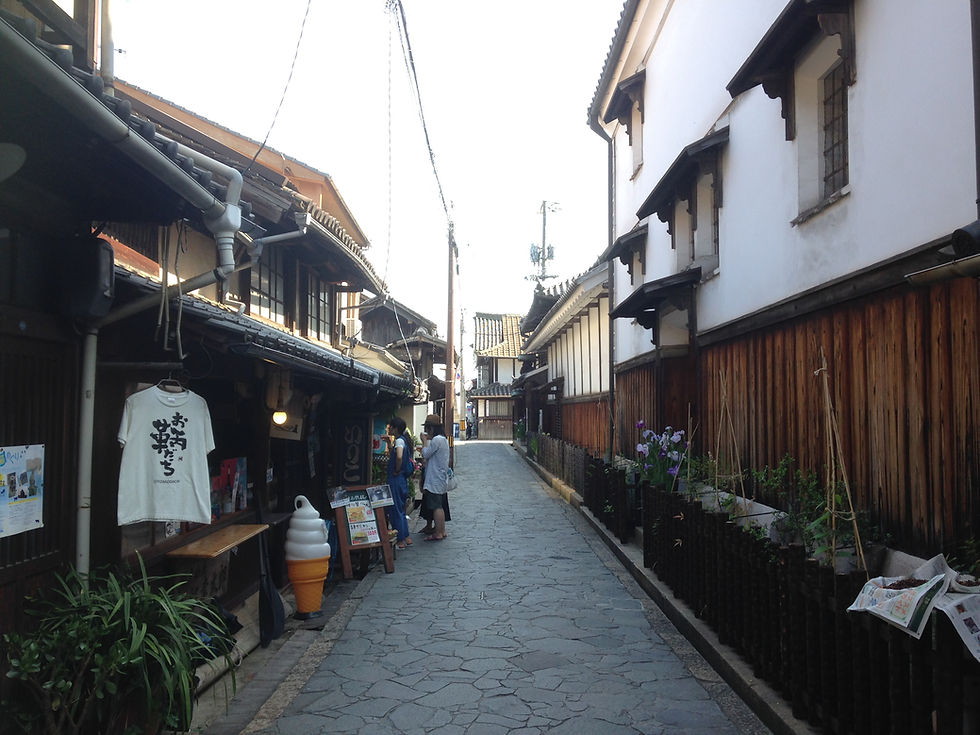
By the port, there are other familiar scenes of Ponyo and Wolverine you can enjoy!


This is one of many fishing docks in the area. This is definitely a very big and active fishing port town in the area. You can also see the view of the lighthouse, museum and where many unique local stores are from a distance in the second photo.


And if you're itching to do some shopping for souvenirs, these shops by the lighthouse will have what you need - and you can help support the local businesses by purchasing them, like that Tomonoura shirt you see in the photo above.


I walked back towards the tourist information center, where I stopped by the home where Sakamoto Ryoma used to hide away from his assassins. A pretty normal home, and probably a good place to shy away from those trying to kill you!


Finally, time to head back by bus...


Even the bus stops are as cute as ever! Each one in the town seems to be of a different cat design, which is definitely a selling point for cat lovers.


Whether you are here for an anime pilgrimage or purely an off the path experience, it is a quaint little town that caters to different interests. It is a town with a wealth of history and culture. And because it is fairly off the path from other popular tourist destinations, you can enjoy all of it without getting overwhelmed by the hustle and bustle of city life.


I highly recommend this spot if you have a lot of time on your travel agenda!


Until next time, Tomonoura!


How to get there (Tomonoura):

From Fukuyama station – Take the Tomotetsu bus towards Tomokou (Tomo line 鞆線) (http://www.tomotetsu.co.jp/tomotetsu/jikoku/tomosen.pdf) and get off at Tomonoura. It takes about 30 minutes from Fukuyama station.


As of writing this, Japan has the second-most infection cases in the world right now. Personally, I’ve said my piece even in January before Japan started dealing with the cruise cases, but I wanted to use this place to really explain my thoughts on this. Particularly, why this is going to get worse if people’s attitudes about prevention don’t change.


I‘m not here to criticize authorities on this issue. While I really don’t think they’re doing a good job, I don’t think Japan is the only country that’s not doing a good job protect its citizens. It’s true that we really don’t know much about this virus to act accordingly, but it’s obvious that the Japanese government is more concerned protecting its ego than its people (sound familiar?)


But beyond the government, I feel the people itself is going to contribute to the chaos is they don’t change their old ways of thinking.


Let’s talk first what Japanese people think is effective flu prevention methods:


1. Getting the flu shot

2. Wash your hands thoroughly

3. Wearing a mask

4. Opening the window and airing out the room

5. A 5-day mandatory sick leave

6. (At schools) Shutting down the class if more than 5-10 students caught the flu

7. Covering with their hands to sneeze and cough


Some of these methods are obviously scientifically-speaking better than others, but let’s just talk about them anyway and how those practices are going to affect COVID-19 going around.


1. Getting the flu shot


There’s really nothing wrong with this method. Lots of Japanese people take really good preventative measures and make sure they pay the some odd 3000yen (varies) for their flu shot before flu season. Some companies even get doctors to come and offer to give shots in-house, which is a great way to get busy people to get their flu shot. Especially in a culture where work trumps pretty much every aspect of their lives, even family.


Obviously, the trouble comes when not everyone gets the shot for whatever legitimate reason they have (or just none at all) - they have tight budgets, they’re too busy, etc. Even in my office, about less than half of the staff get the flu shot when the doctor swings by for in-house flu shots. I mean, sure, they might have gotten it by themselves so that’s totally legit.


And people not getting flu shots isn’t unique to Japan of course, so I really have the least amount of problems with this method of flu prevention. And flu shot has nothing to do with COVID-19... So there’s nothing much more to say.


2. Washing your Hands


Now this is where it gets sticky. Japanese people are told to wash their hands thoroughly with soap and scrubing as a preventative measure. And that’s just about where it all ends.


The older you are, the less likely people seem to follow through. Young children will at least follow the adults’ instructions to wash their hands with soap, but the adults don’t seem to take their own advice. So many times I’ve walked out of a toilet and simply see people do a 1-second dip in the sink before walking out. Even in the midst of COVID-19, I am still seeing ladies walk out of bathrooms dipping their fingers in for 1 second, then walking out.


Mind you, these are toilets with soap. So don’t argue with me that a lot of Japanese bathrooms don‘t have soap, which is absolutely true. Even with soap in place, people won’t use it.


Alcohol is not exactly something they practice using, but in the midst of COVID-19, I have seen a few more places put out alcohol for customers. There are a lot of wet wipes you can buy, and Japanese people use them a lot - but you can decide if they actually disinfects or not.


Point is, if more people don’t start thoroughly washing their hands, we’re going to have a problem.


3. Wearing a Mask


This seems to be every Japanese person’s holy grail when it comes to all illnesses and allergies. My problem with this approach is that a lot of Japanese people seem to thinking these masks are made of 100% foolproof virus-blocking material, when in fact they are just paper masks that really don’t do much.


Japanese people will cough freely in these. They’ll take them on and off and reuse them. I hope you can see where the problem lies. Is it better than not wearing a mask? Well, if COVID-19 is airborne-spreading and paper masks do jackshit, then no one is safe really. I’m not sure which is better at this point.


4. Opening the Window


Oh boy, oh boy. This one is a fun one.


Yes, Japanese people will open windows to air out the room of virus. In the middle of winter. When it is still super cold outside. I’ll let you be the judge of this one.


5. 5-day mandatory day off


Not much to say here, I think this is one of the better ones. Though... if you’re as critical of the work culture here as I am, you’d wonder if people actually take these days off, or if their manipulative boss will actually force them into work or get fire/lose a promotion. You can think about this one yourself as well.


6. Class Quarantine


I was pretty surprised this one when I first started working here. But I like the idea of it. With the other ways Japanese people seem to deal with flu, getting the students temporarily away from each other for 5 days would be a good idea than not. It seems like a school has already started to do this.


7. Covering Cough with your Hands


Let’s think about the previous point about hand-washing. Japanese people will use their hands to cover their cough instead of their sleeves, which a lot of western countries have been taught to do. So if they cough into their hands, and they don't wash their hands properly, every Japanese person is potentially a germ incubator waiting to happen. I don't know about you, but that honestly scares me.


What do you think about the coronavirus situation in Japan?


© 2019-2021 by Kansai & Beyond

bottom of page